Commercial Flood Damage Cleanup in Pittsboro, IN
Commercial flood cleanup in Pittsboro sized to the square footage, with daily readings and a file your carrier can follow.
Commercial Flood Damage Cleanup in Pittsboro, IN starts with one call to Pittsboro Water Restoration: live 24/7 dispatch, IICRC certified response, and honest written scopes before work begins. Call (463) 223-3831.
- Service: Commercial Flood Damage Cleanup for Pittsboro homeowners
- Service area: Pittsboro, IN and surrounding areas
- Response time: Emergency water calls in Pittsboro get crews rolling, not callbacks
- Licensed and insured (License #RC21100059)
- Serving Pittsboro, IN since 2018
Commercial Flood Cleanup in Pittsboro
When floodwater reaches a commercial building in Pittsboro, we'll pump it out and dry the structure section by section.
Flood Exposure Here
Flood risk here runs highest for sites close to White Lick Creek. Slow draining clay soil can hold floodwater against foundations and lower levels. Your building's own flood exposure gets mapped when we walk the site with your facilities contact.
Our flood crews work commercial sites throughout Pittsboro, including the blocks around Pittsboro Primary School and Tri-West High School. We also handle commercial flood cleanup in Jamestown, Lizton, Avon and Danville.
Commercial Flood Damage Cleanup for Pittsboro Businesses
In a multitenant building, one flood turns into several conversations at once, with tenants, your carrier, the ownership group, and whoever owns the pipe that failed. Pittsboro Water Restoration works commercial flood losses across Pittsboro and Hendricks County and keeps the technical side straight so your attention can go to the tenants. Crews work the building zone by zone, with moisture readings logged per suite so each occupant's file stands on its own.
Pittsboro Water Restoration runs commercial flood losses in zones, so the parts of your Pittsboro property that reach dry standard can go back into use while the crew keeps working the rest. Each zone has its own readings, and each release gets documented with the numbers behind it. You decide how to sequence reopening with your own occupancy requirements.
Concrete gets its own drying plan. In situ relative humidity probes go into the slab at marked locations, surface readings get taken alongside them, and both get logged daily so the curve is visible. Desiccant dehumidification pulls the vapor pressure down far enough to move bound water out of masonry and concrete, which is slow work and the reason a commercial slab usually outlasts the rest of the drying scope.
Carriers evaluating lost income want to know which areas of the building were unusable and when each one came back into service. The zone by zone drying log puts dates and readings against each section, which gives you something factual to work from. Pittsboro Water Restoration provides the drying record and the release documentation. What happens with the income side of the policy stays between you, your accountant, and your carrier.
While you sort out which policy applies to a flood, the building keeps absorbing water. Call Pittsboro Water Restoration to get the pumping and drying started on your Pittsboro property, and the file will show the source and extent of the loss for whichever policy your agent and the adjuster decide responds.
Signs You Need Commercial Flood Damage Cleanup
If you notice any of these in your Pittsboro building, schedule a free inspection before the issue worsens.
Part of the building without power after water reached the lower level
VCT or sheet vinyl lifting at the seams, with adhesive bleeding through or going soft underfoot
Wet insulation hanging out of a wall cavity after floodwater passed through
Pallet bottoms dark and soft, with cardboard cases on the lowest layer collapsing under weight
Water tracking in from under a loading dock door, leaving a silt line across the slab
Dock seals and door thresholds showing silt or a waterline after a heavy rain
Mechanical room under water, with floodwater around the boiler or the air handler
A musty or sour smell strongest at return air grilles or when the air handlers first start up
A damp dark band across the concrete slab that spreads overnight and shrinks during the day
Standing water in an underground parking level with an oily film on the surface
How Pittsboro Water Restoration Handles Commercial Flood Damage Cleanup
We follow these steps in order on every Pittsboro job.
Source and Contamination Check
The crew records where the water came from and what it crossed, and photographs the entry point. Floodwater and sewer backups get containment with HEPA filtered negative air before anything else, and every load of soaked material that leaves gets documented.
Mud and Silt Removal
Mud goes into containers first, starting at the far end of the building and working toward the exit. Wet vacuums and a rinse pass follow, and floor drains get flushed and checked so water can drain freely.
Slab and Concrete Drying
Concrete and masonry hold bound water long after the surface feels dry. In situ relative humidity probes and surface readings taken from the same marked locations daily show what the slab is doing, which is what decides when flooring can go back down over it.
Daily Documentation
Moisture readings, temperature and humidity logs, equipment counts by room, and photographs get recorded every day equipment runs. Affected materials get compared against dry standard readings taken elsewhere in the same building, so the file shows a drying trajectory an adjuster can follow.
Phased Section Release
Areas that reach dry standard get released back to use while the crew keeps working sections that still hold moisture. Each release carries the readings for that zone, which lets the property come back in pieces as the building and your own occupancy requirements allow.
Commercial Flood Damage Cleanup in Pittsboro
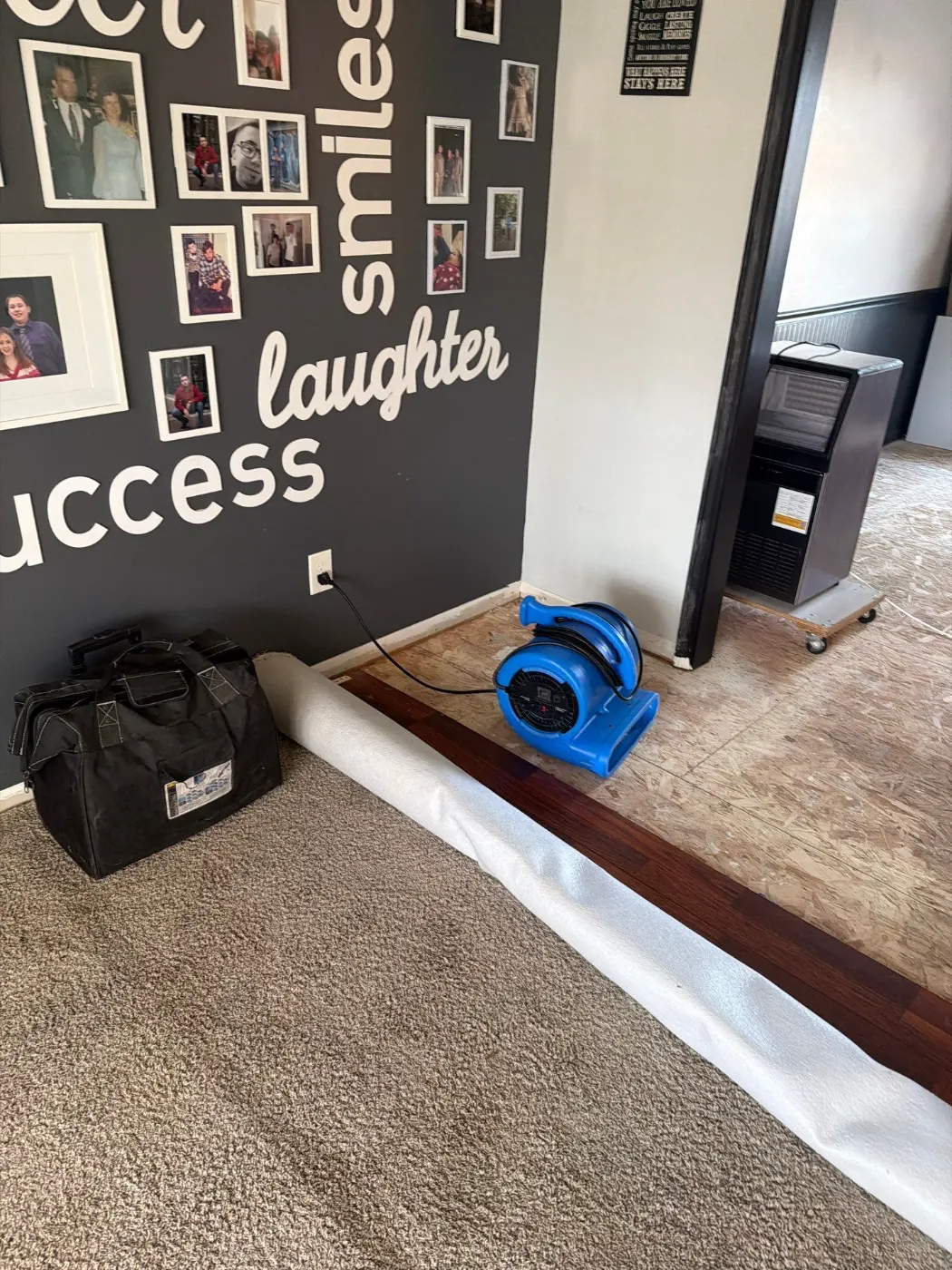
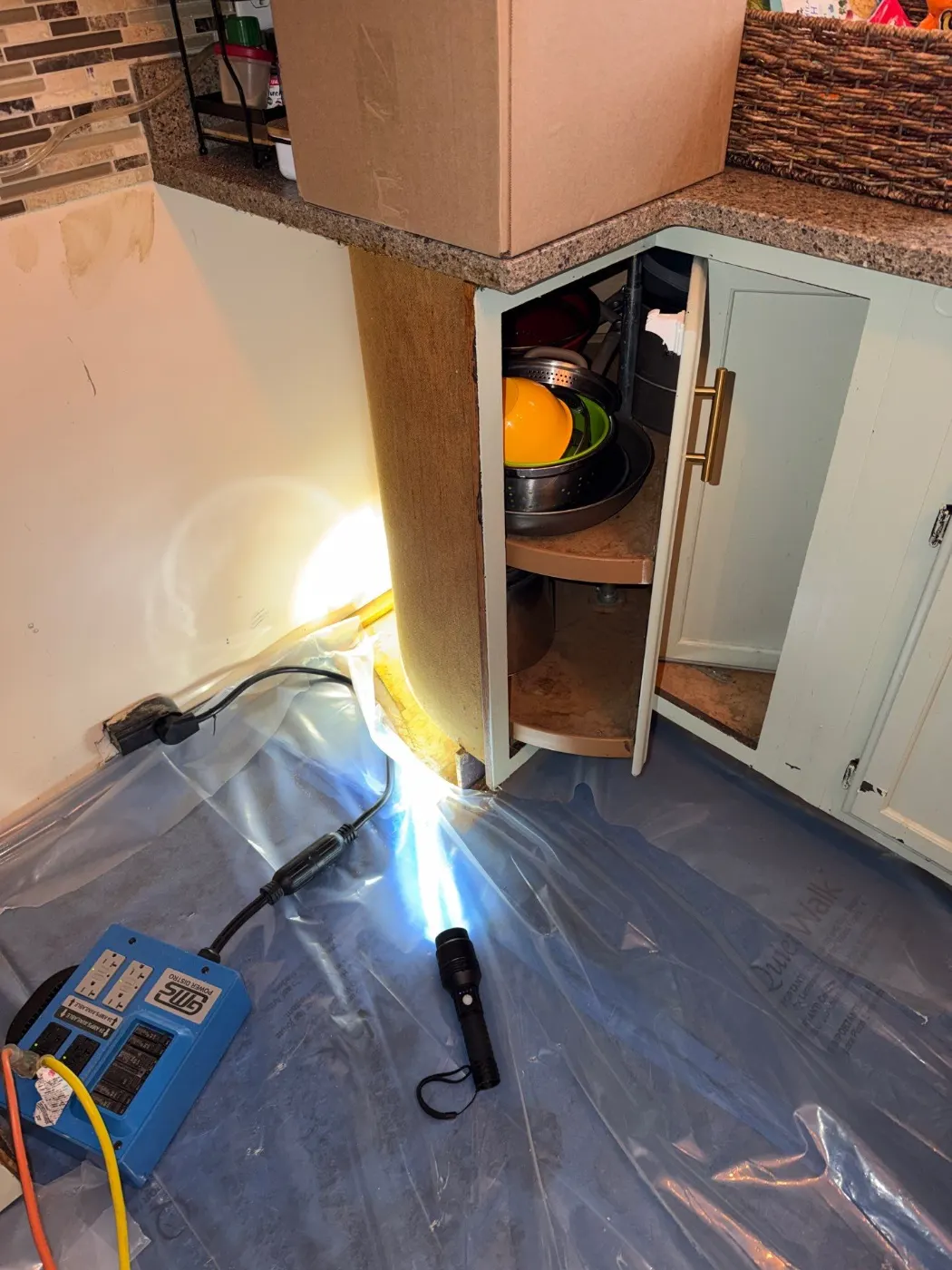
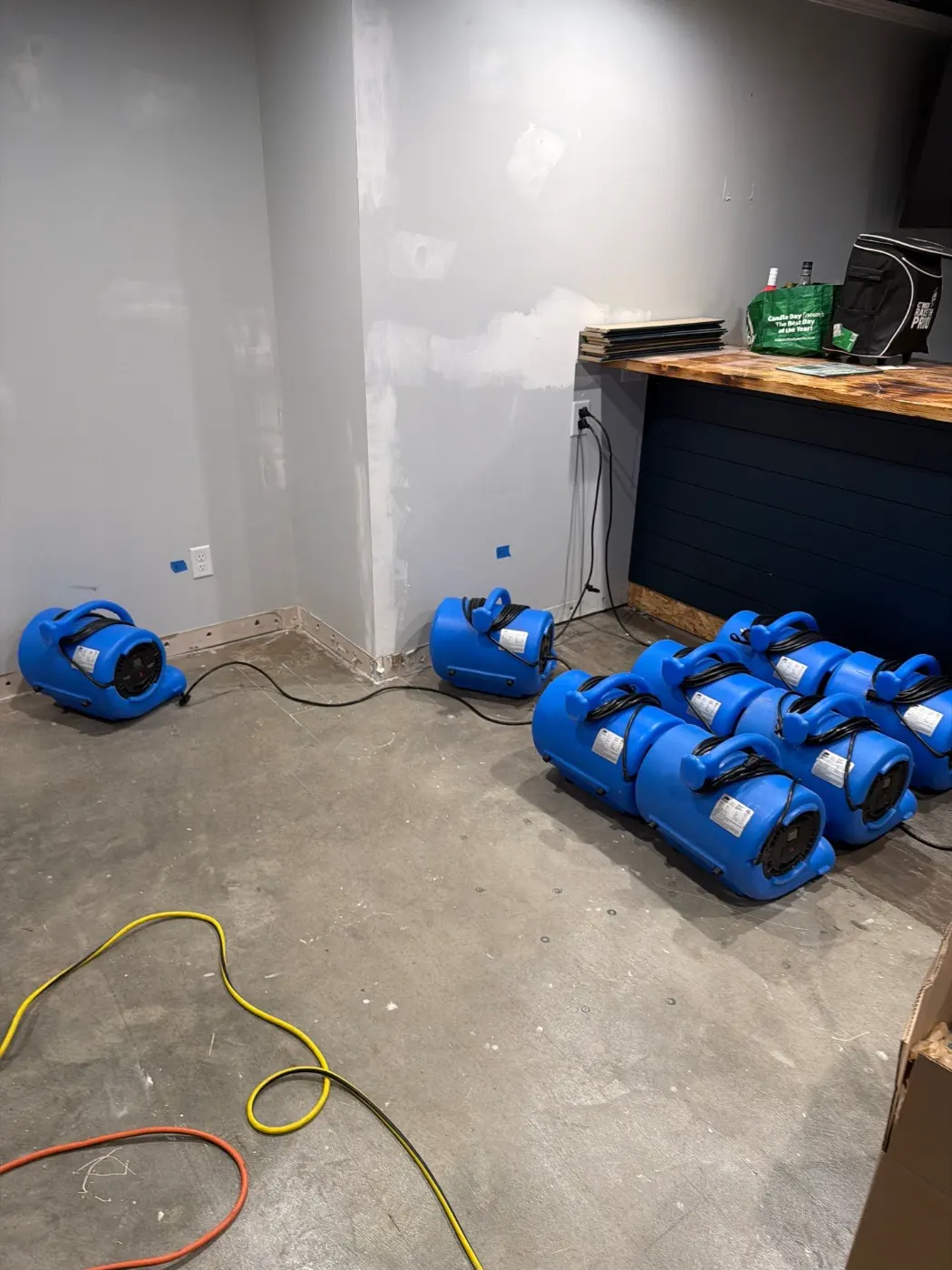
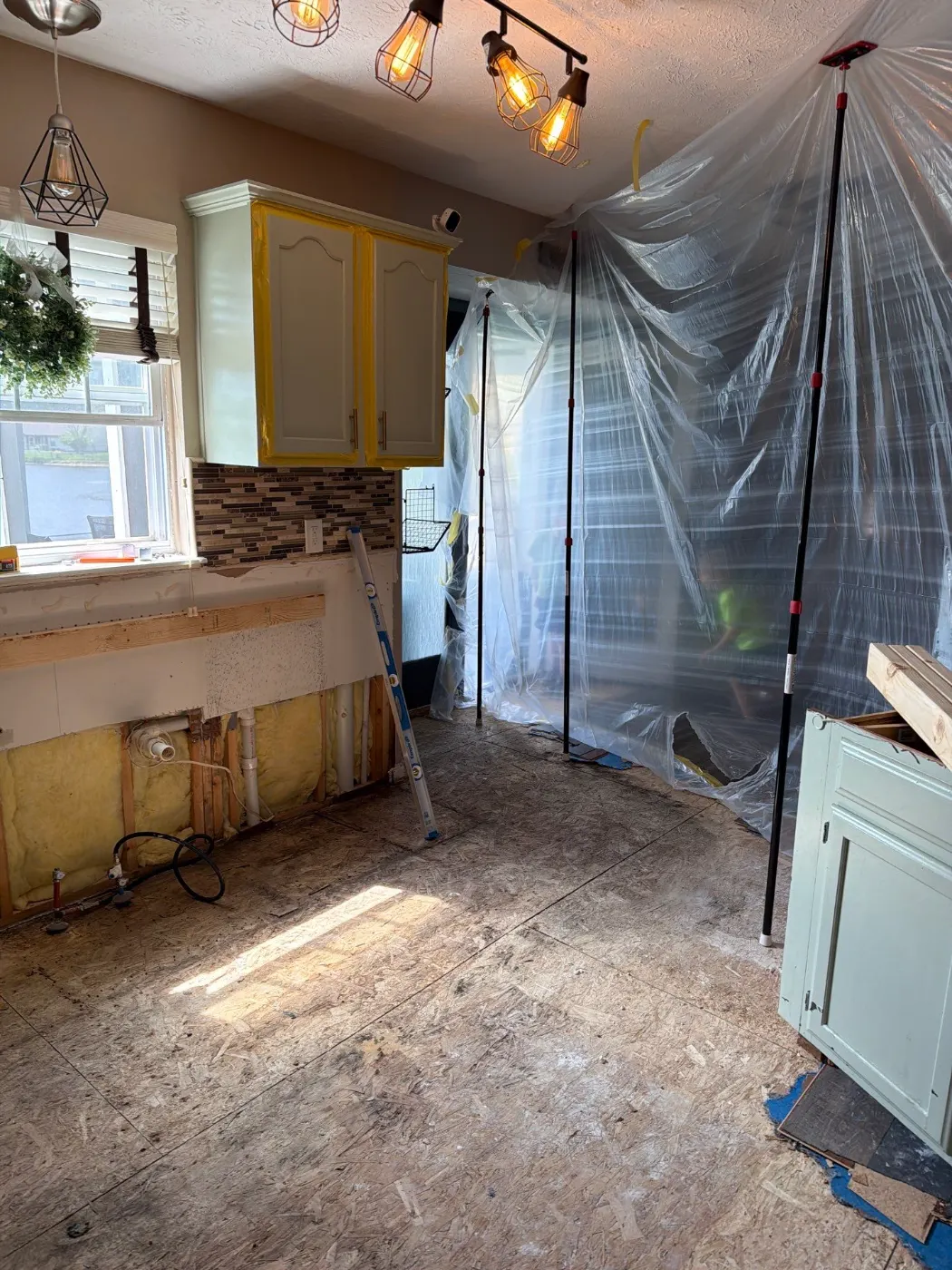
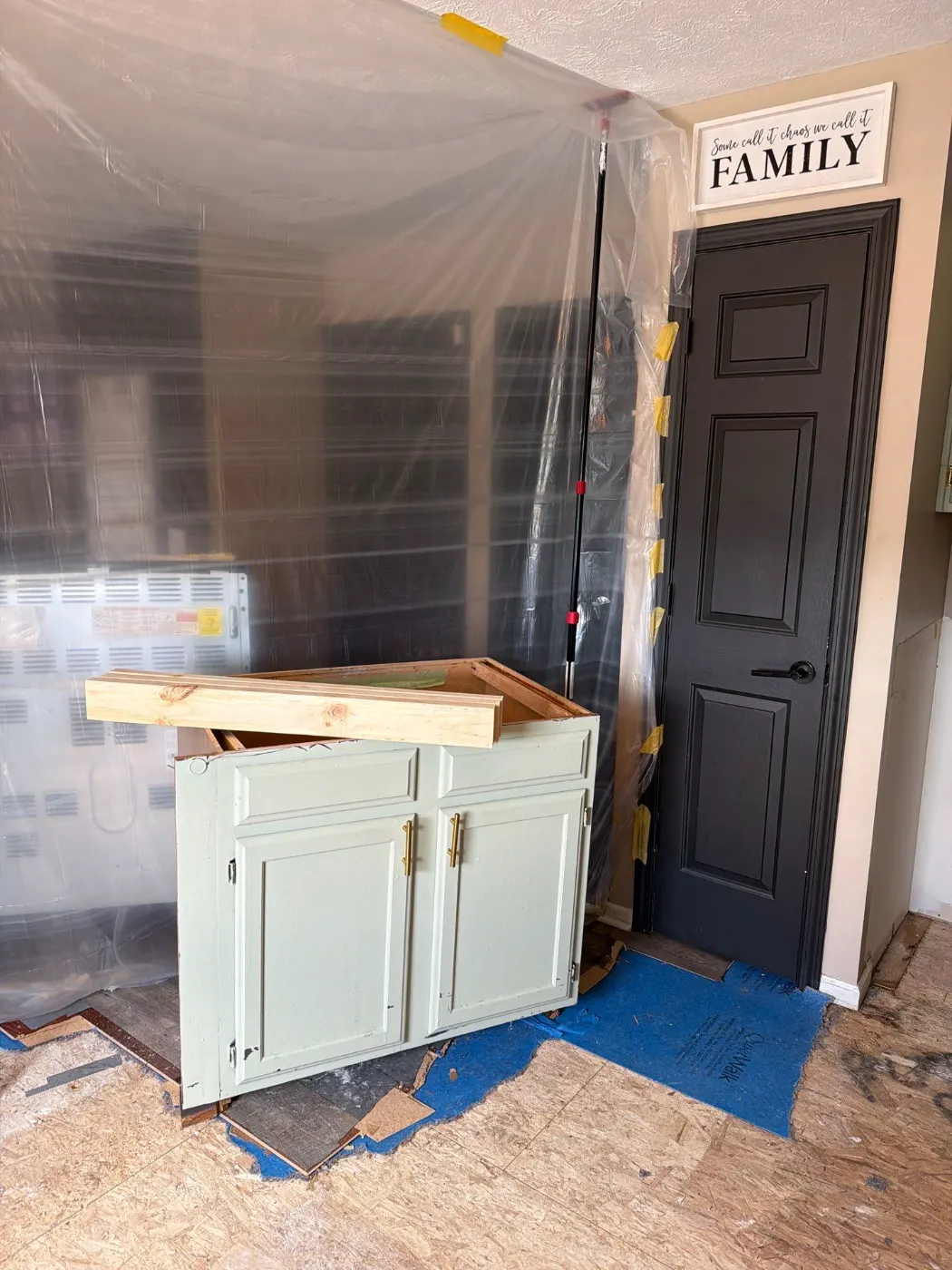
Photographs from real commercial flood damage cleanup jobs completed by our crew in Pittsboro and surrounding areas.
Commercial Flood Damage Cleanup FAQ
Questions Pittsboro property managers ask us about commercial flood damage cleanup.
Guidance and Standards for Commercial Flood Damage Cleanup
- The ANSI/IICRC S500 is the published standard for professional water damage restoration. The current edition is the Fifth Edition, 2021. IICRC S500 Standard
- EPA advises drying water damaged areas and items within 24 to 48 hours to prevent mold growth. EPA: A Brief Guide to Mold, Moisture and Your Home
Pittsboro Neighborhoods We Serve
We take commercial flood damage cleanup calls in every part of Pittsboro. Pick your neighborhood for local details.
Other Restoration Services in Pittsboro
Pittsboro Water Restoration handles the full scope of restoration work. Explore our other services below.
Water Damage Restoration in Pittsboro
24/7 emergency response. IICRC certified water restoration from extraction to full dry out.
Learn more →Basement Flooding in Pittsboro
Basement water emergencies handled fast. Extraction, drying, mold prevention.
Learn more →Sewage Cleanup in Pittsboro
Category 3 biohazard cleanup. Full containment, decontamination, structural restoration.
Learn more →Request Commercial Flood Damage Cleanup
Reach Us Directly
Our team is available 24/7 for emergencies and ready to schedule inspections during business hours.
Need Immediate Help?
For active water or mold emergencies, call us directly. We are available 24/7.